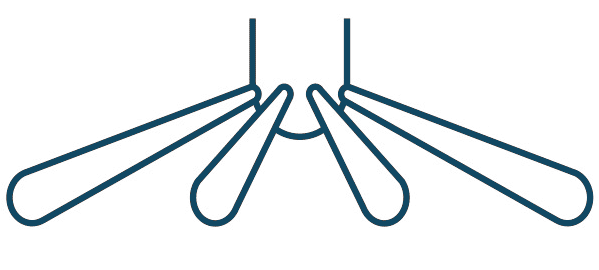
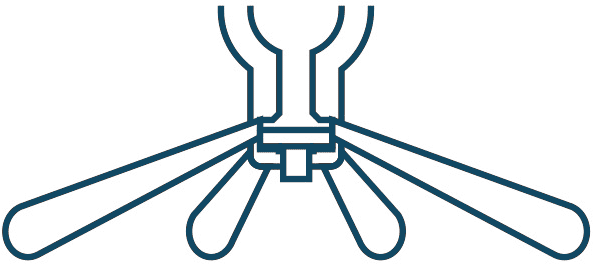
Valvijet was designed by the inventor Vianney Rabhi, who also patented the VCRi variable-compression-ratio engine in 1997, and led its R&D with the company MCE-5 Development from 2000 to 2013.
In 2012, Vianney Rabhi filed the patent for the SSP concept, dedicated to one of the most promising fields in internal combustion engines: high-energy ignition. This concept underwent a first study phase between 2012 and 2016.
In 2017, Vianney Rabhi filed the patent for the SSP+ concept, which would later become Valvijet. It is a valve with specific characteristics that protects a pre-chamber, combined with a fuel-air mixture injector. In total, 11 patent families, extended across 15 countries, cover the entire Valvijet system. The most recent patents, essential for its industrialization, date from 2025.
Since 2018, Valvijet has been the subject of an intensive R&D program carried out in several phases, each devoted to a component protected by the Valvijet patent portfolio: pre-chamber with valve, “intelligent” injector, air-fuel mixer, and micro-compressor. The ECUs, drivers, and control software are also developed as part of this program. The control strategies have been the subject of several patents.
Danielson Engineering:
The design of Valvijet components is carried out in close collaboration with Danielson Engineering, a company with more than 30 years of expertise in producing prototype engines for automotive manufacturers.
Renowned for its capabilities in design, modelling, simulation, manufacturing, and testing on component test benches and full engine test benches, Danielson also operates its own foundry, which produces strategic parts for the aeronautics and defense sectors.
As part of the Valvijet project, Danielson also manages the coordination of numerous subcontractors, ensuring coherent integration and a high level of quality throughout the entire development chain.
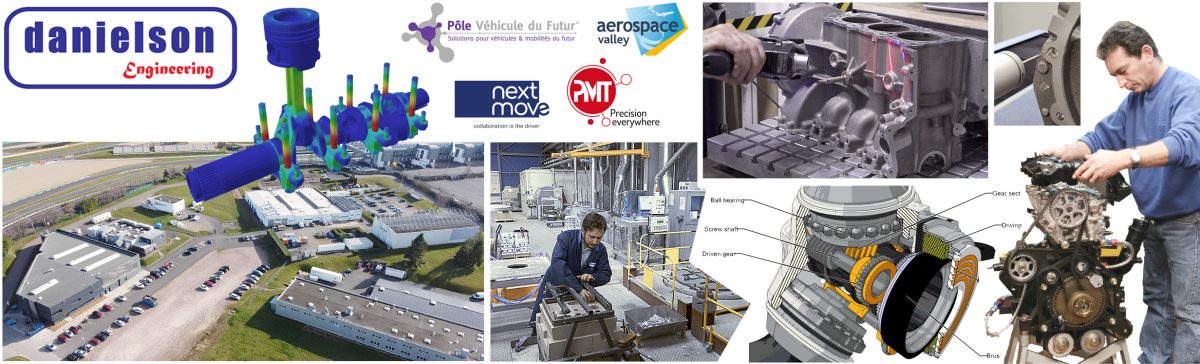
Valvijet components are designed and manufactured in collaboration with Danielson Engineering
(More information: https://danielson-groupe.fr)
The CERTAM:
Since 2019, two single-cylinder engines have been running continuously at CERTAM in Rouen, along with a rapid-compression machine used to visualize combustion through OH chemiluminescence and Schlieren strioscopy.
CERTAM also has six dynamic engine test benches, four high-performance benches for electric machines, two rapid-compression machines, and a 4×4 chassis dynamometer. Additional equipment includes benches dedicated to fuel injection and blow-by, as well as mobile pollutant-measurement units.
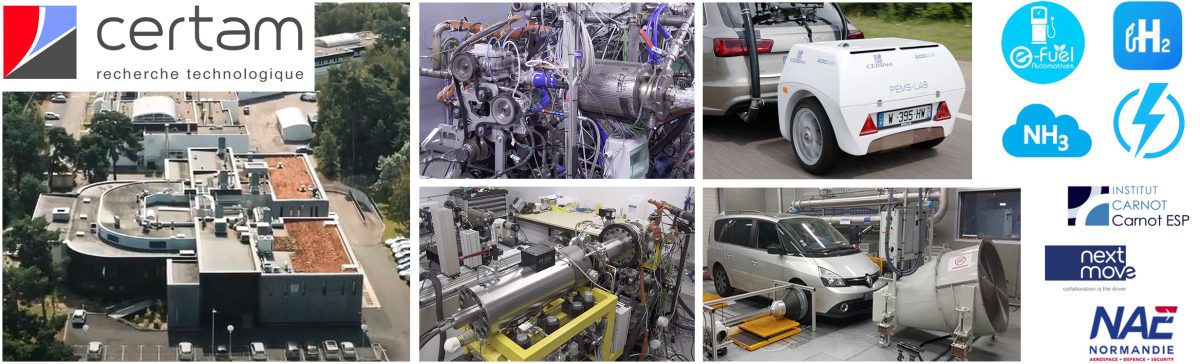
CERTAM conducts Valvijet testing on engines and on a rapid-compression machine
(More information: https://certam.fr)
In 2025, the Valvijet technology entered a new phase. Testing confirms its soundness. Valvijet no longer presents any functional risk that could jeopardize its industrial prospects. Its reliability, demonstrated over several hundred hours of testing, now supports projections toward automotive-level lifetimes. Even more robust heat and surface treatments - up to twice as resistant to abrasion as those currently used - remain possible, though they have not yet been necessary. There are no remaining blocking points, only improvements to be made on solid foundations.
The critical components - air–fuel mixer, intelligent injector, and pre-chamber valve - have now been demonstrated on engines operated on test benches under representative conditions (TRL 5–6). Only the Valvijet micro-compressor is still under development, with intermediate validation of several of its components on dedicated benches. Its development will be completed in early 2026.
A detailed manufacturing cost study, conducted with leading partners and equipment suppliers, confirms the economic attractiveness of the system. Relative to the expected gains in thermodynamic efficiency, Valvijet offers a very low cost per gram of CO₂/km avoided, meeting even the most ambitious profitability targets.
The inventor of Valvijet, Vianney Rabhi, and the company Valvijet SAS jointly own the Valvijet patents. Created in 2021, Valvijet SAS is a secure “patent box” / “IP box”, structured to be resilient to any failure. It co-finances the R&D program dedicated to Valvijet. Investments amount to tens of millions of euros.
The Valvijet technology is protected by 12 patent families covering all of its components. Valvijet patents are systematically extended to 15 countries, the most strategic ones.
Valvijet’s business model is based on the commercialization of intellectual property rights: patents and know-how. Licensing of these rights includes all prototype parts, components, software, drivers, consulting and services, as well as all required adaptations, training, and support.
Valvijet’s partners possess all the capabilities needed to produce cylinder heads and pre-chambers for any customer, according to their specifications.
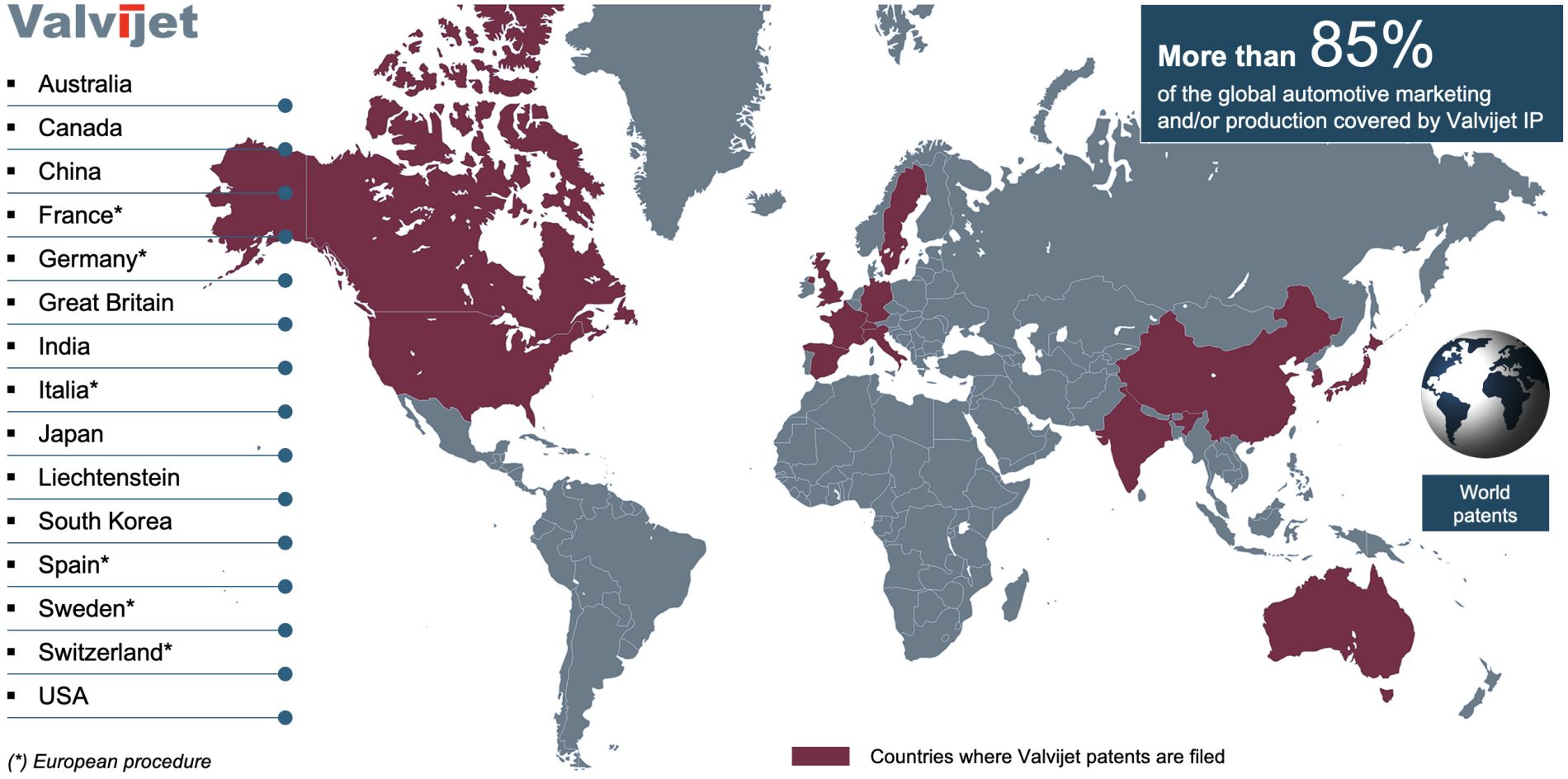
Intellectual property is at the core of Valvijet’s business model
(More information: Valvijet patents portfolio)